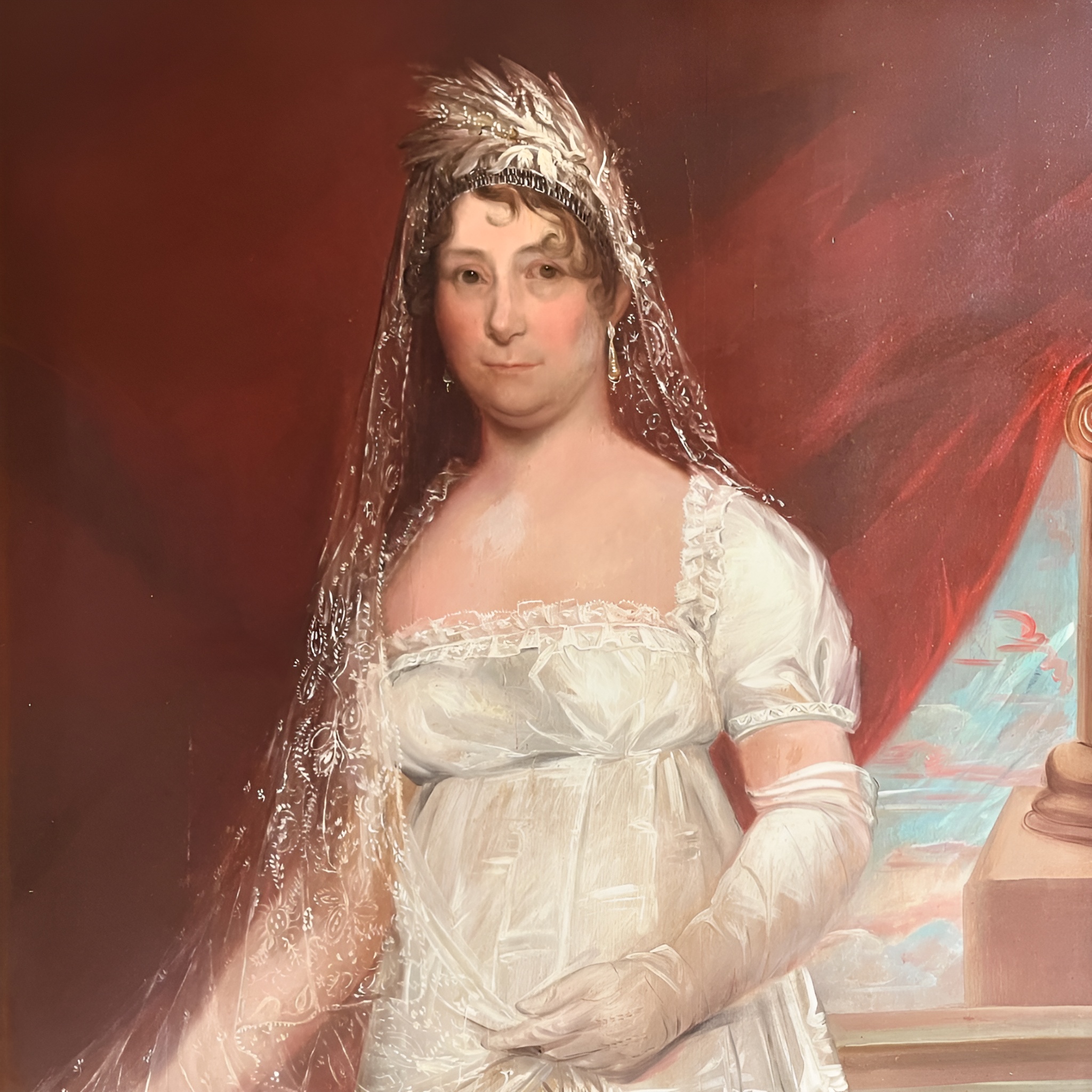
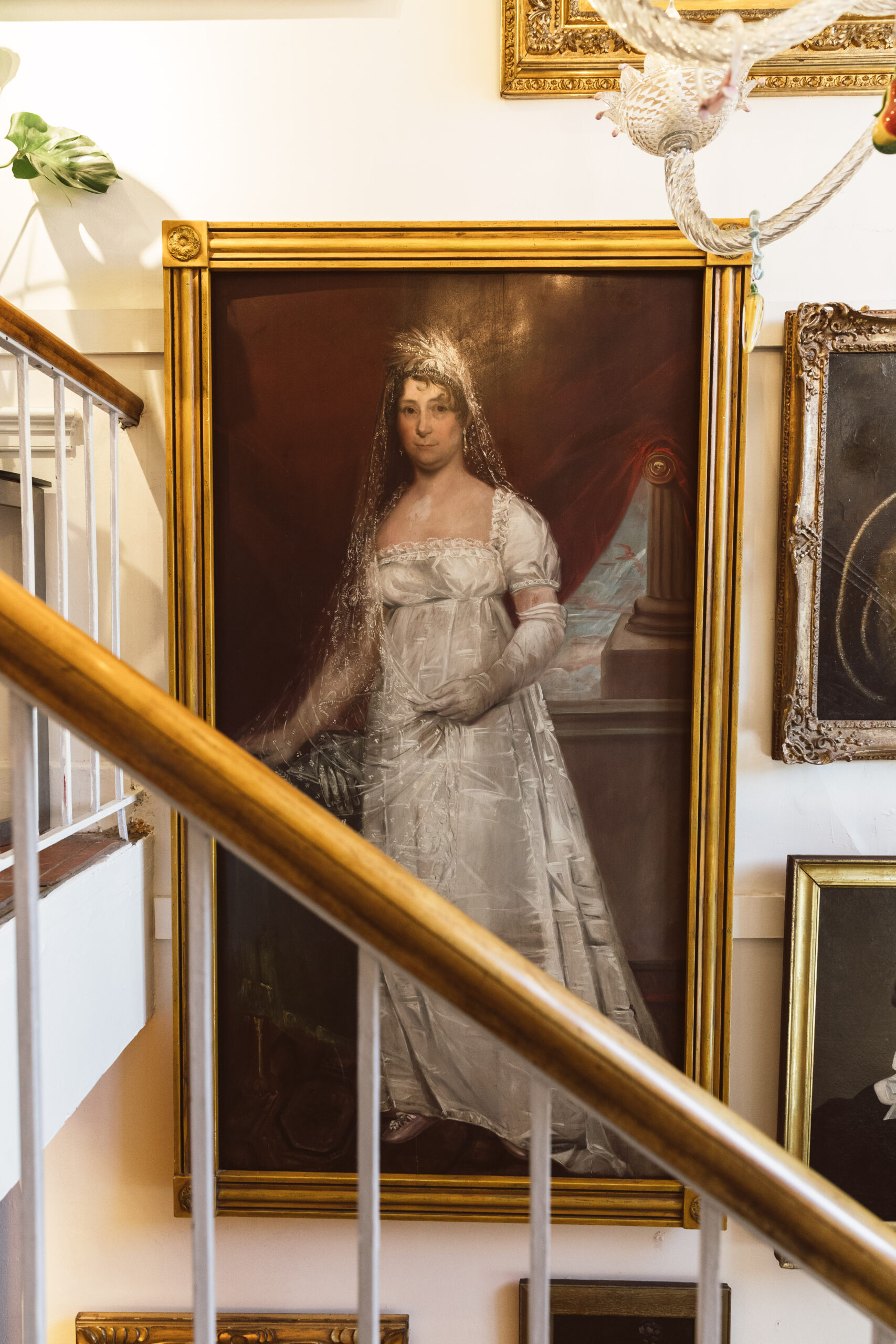
After Madison’s term in office, the painting was gifted to the Presidential guest residence, the Blair House, named after Dolley’s relative Montgomery Blair. Resting in the heart of the nation, it wasn't until 1960 that her poised gaze met that of another iconic First Lady, Jackie Kennedy. Drawn to the portrait during her White House restoration documentation, Jackie brought renewed attention to the work. Her efforts, in turn, drew the scrutiny of Marvin Sadik (1932–2013), then-director of the National Portrait Gallery in Washington, D.C.
Sadik claimed the portrait wasn’t Dolley’s. He was known for controversy. In the February 1975 edition of Art News, an article was published asking “Who painted the George Washington portrait in the White House? A prominent historian says there is strong evidence that one of our most important paintings is not by Gilbert Stuart.” In this four-page article, Marvin Sadik is quoted as saying “the painting is not by Gilbert Stuart,” with Clement E. Conger, the curator of the White House, stating in the next paragraph “the painting is by Gilbert Stuart”. The stories and debates around the authenticity of artworks are always interesting and usually entertaining. Sadik’s voice illustrates how identity is tied to history, authenticity, and how it evolves with shifting values and appreciation. In the end, his voice reached Jackie’s ears and the painting was removed from the White House and returned to the original donors in Annapolis.
An affluent art collector, with a passion for rediscovering lost masters, Richard Tetlie found the painting and bought it for $10,000, a huge sum in 1962, convinced it was Dolley Madison. This was not the first time Marvin Sadik’s views had been questioned.
After Tetlie’s death in 1999, L’Enfant Gallery was asked to handle his estate. Some works were purchased by L’Enfant Gallery, but most of the collection was donated to what is now The Flaten Art Museum. The Flaten Art Museum opened in 2006 and houses a collection of more than 2,000 classic paintings, sculptures, wall reliefs, textiles, and furniture.
Tetlie's father, Reverend Joseph Tetlie, was the college's first Rhodes Scholar, and his maternal grandfather, Professor Halvor T. Ytterboe, is credited with saving St. Olaf from financial ruin during the Depression of the 1890s. Tetlie was also a great-nephew of St. Olaf's first president, Thorbjorn N. Mohn.
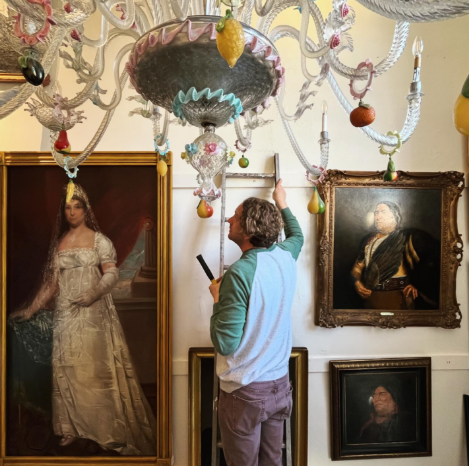
Not only did Tetlie have significant ties with the history of Minnesota colleges, but one of them in particular, St. Olaf College, rose to fame in the art world in 2018 when experts verified a work they held of Eva Mudocci, the British violinist, as by Edvard Munch. Whether this is truly the painted portrait of Dolley Madison or not, this painting has become a storyteller in its own right: honored by Jackie Kennedy, usurped by Marvin Sadik and cherished by Tetlie. Dolley’s story exposes how we frame history matters as much as what we believe to be true. Now, the well-travelled portrait of Dolley Madison has found a place to stay at L’Enfant Gallery, where she was celebrated during Women’s History Month in 2024. But something tells me her voyage is far from over.
John Wesley Jarvis (1780–1840) was a pioneering portraitist of the early American Republic whose works captured the spirit and ambition of a young nation. Born in England and raised in New York City, Jarvis became one of the most sought-after painters of his generation. He studied under Edward Savage before establishing his own practice, where he mastered the ability to convey social stature through realism and atmospheric subtlety. His portraits of military leaders, statesmen, and prominent citizens balanced technical precision with emotional restraint, embodying the emerging American ideals of character and virtue. Jarvis’s influence extended through his teaching—most notably mentoring painter Henry Inman—and his workshop became a cornerstone of early 19th-century portraiture. Despite occasional controversies and personal eccentricities, Jarvis remains an essential figure linking American neoclassical portraiture to the expressive realism that followed.
The painting comes from the private collection of Richard Tetlie, forming part of the collection at St. Olaf’s College, Minnesota and was previously displayed in the presidential guest suite, Blair House, at the White House, Washington D.C, where it was said to be a favourite of Jackie Kennedy.
Jarvis often painted on wood panels or fine-woven canvas, using layered glazes and muted tonal ranges to achieve naturalistic texture and depth. His varnish work produces a warm translucence that accentuates skin tone and period attire, characteristic of early 19th-century American portraiture. This piece is painted in oil on a single panel of tulip poplar, accompanied by a reproduction period 80” x 40” frame, specifically designed by Gold Leaf Studio.
If you are interested in discussing the purchase of this item, please suggest your availability (EST) for a phone call with Peter Colasante via our contact page.